Rechercher dans ce blog

Thursday, January 27, 2022

Broncos agree to terms with Nathaniel Hackett to be new head coach - NFL.com

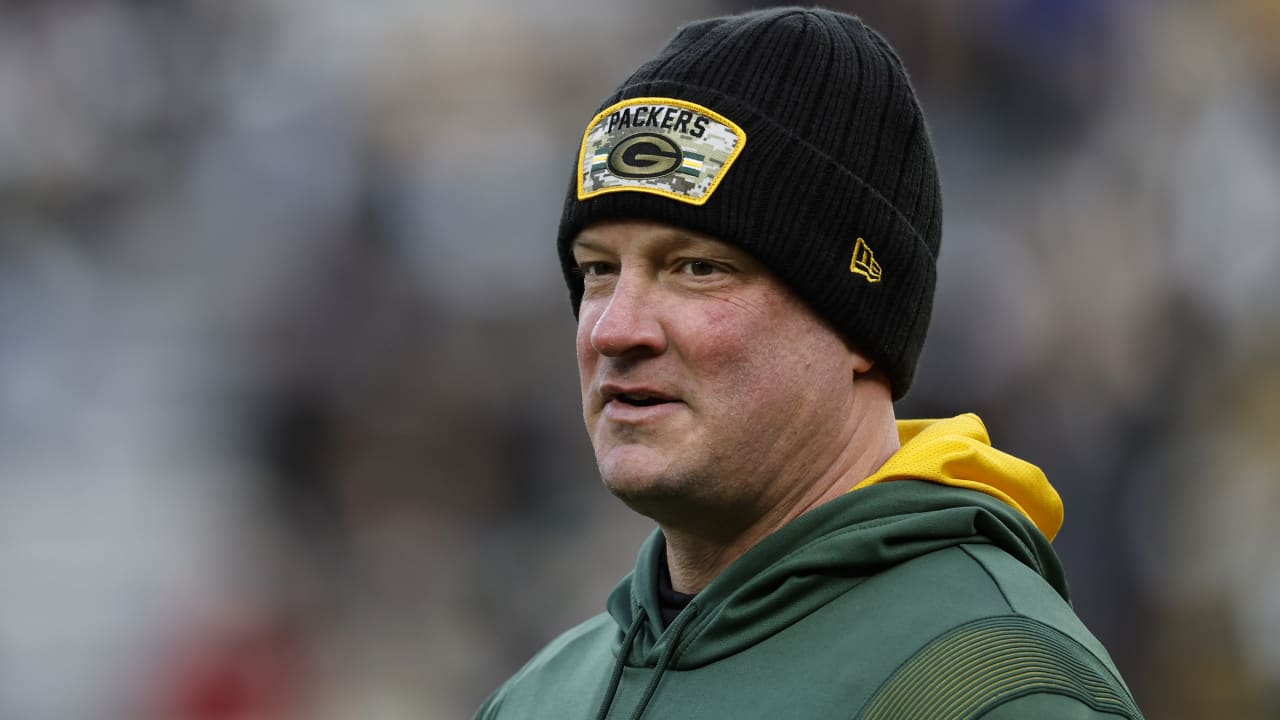
The Denver Broncos have selected Nathaniel Hackett as the 18th head coach in club history.

NFL Network's Tom Pelissero reported Thursday morning that the Broncos are finalizing a deal with Hackett to make him their new head coach, per sources informed of the situation. The team later announced the hiring.

Hackett's hire is the first of nine head coach openings to be filled this offseason.

"Nathaniel Hackett is a dynamic leader and coach whose intelligence, innovation and charisma impressed us from the very start of this process," Broncos general manager George Paton said in a statement. "In addition to having a brilliant offensive mind, Nathaniel is an outstanding teacher and communicator with a strong vision for all three phases of our team. 

"Getting to know Nathaniel over the last couple weeks, he will bring positive energy and enthusiasm to the entire Denver Broncos organization as our head coach. Creating a winning and competitive environment for the players, coaches and staff — and doing it through personal connections and efficiency — is a big part of his plan for the Broncos.

"From developing younger players to working with all-time greats as a key part of winning teams, Nathaniel has had tremendous success in this league. He's a student of the game and knows how to put players in positions to win. 

"I could not be more excited to partner with Nathaniel and welcome him along with his family — his wife, Megan, and children Harrison, London, Briar and Everly — to the Denver Broncos."

The Green Bay Packers offensive coordinator was a hot candidate this cycle. Talks heated up with Denver on Wednesday night as Hackett planned to interview for the Jacksonville Jaguars coaching job Thursday. The Broncos made sure that interview didn't happen.

Hackett, 42, has spent the past three seasons as the Green Bay Packers offensive coordinator, helping Aaron Rodgers win what is expected to be back-to-back MVPs.

The Packers have the second-most offensive TDs (160) and the fewest giveaways (37) in the NFL since Hackett became the OC in 2019.

While Rodgers and Matt LaFleur received most of the credit outside the Packers facility for Green Bay's potent offense, both have raved about the job Hackett has done preparing the team each week.

Green Bay hopes to fill its now vacant OC role from within, with quarterbacks coach Luke Getsy the prime candidate to take over.

Denver, meanwhile, will now look to build a staff around Hackett. Los Angeles Rams pass game coordinator Ejiro Evero is considered a leading candidate for defensive coordinator, NFL Network's Mike Garafolo reported. The Broncos will also request to interview Green Bay's run game coordinator, Adam Stenavich, to be their new offensive coordinator, NFL Network Insider Ian Rapoport added.

A former linebacker at UC Davis, Hackett spent his early career as a college assistant before leaping to the pros as an offensive quality control coach with the Tampa Bay Buccaneers under Jon Gruden in 2006. After returning to college to be Syracuse's passing game coordinator and offensive coordinator, Hackett followed Doug Marrone to the Buffalo Bills as the OC.

Hackett spent two seasons as the Bills OC, then traveled to Jacksonville with Marrone first as QBs coach (2015-2016) and then got the coordinator job when Marrone was promoted to head coach (2016-2018).

As the OC, Hackett didn't call plays in Green Bay, but is considered innovative and energetic, and can relate to players, which will serve him well as a first-time head coach.

Hackett has been endorsed by Rodgers multiple times for head coaching jobs. The connection between the new coach and QB will launch a new round of Rodgers-to-Denver rumors. If the MVP QB decides to force his way out of Green Bay with a trade demand, the Broncos make a lot of sense as a landing spot. Denver has a playoff-caliber roster, with weapons galore on offense and a burgeoning secondary, outside needing a quarterback.

Under former coach Vic Fangio, the defense remained one of the best in the NFL, but the offense couldn't get off the ground due to inconsistent quarterback play. Hackett's task as the first coaching hire under general manager George Paton will be to inject life into that offense regardless of who the next quarterback might be.

Adblock test (Why?)


"network" - Google News
January 27, 2022 at 07:02PM
https://ift.tt/3IGKcfs

Broncos agree to terms with Nathaniel Hackett to be new head coach - NFL.com
"network" - Google News
https://ift.tt/2v9ojEM
Shoes Man Tutorial
Pos News Update
Meme Update
Korean Entertainment News
Japan News Update

Attackers connect rogue devices to organizations' network with stolen Office 365 credentials - Help Net Security

Attackers are trying out a new technique to widen the reach of their phishing campaigns: by using stolen Office 365 credentials, they try to connect rogue Windows devices to the victim organizations’ network by registering it with their Azure AD.

If successful, they are ready to launch the second wave of the campaign, which consists of sending more phishing emails to targets outside the organization as well as within (to expand their foothold).

The campaign

The Microsoft 365 Defender Threat Intelligence Team has recently spotted a large-scale campaign targeting organizations in Australia and South East Asia.

The campaign started with DocuSign-branded phishing email asking users to review and sign a document. By clicking on the “Review Document” button, the target was taken to a fake login page for Office 365, already pre-filled with their username:

rogue devices organizations

“The victim’s stolen credentials were immediately used to establish a connection with Exchange Online PowerShell, most likely using an automated script as part of a phishing kit. Leveraging the Remote PowerShell connection, the attacker implemented an inbox rule via the New-InboxRule cmdlet that deleted certain messages based on keywords in the subject or body of the email message,” the team explained.

The filter automatically deletes messages containing the words “junk,” “spam,” “phishing,” “hacked,” “password” and “with you,” so the legitimate account user won’t see non-delivery reports and IT notification emails that might have been sent to them.

Next, the attackers installed Outlook onto their own Windows 10 machine and connected it to the victim organization’s Azure Active Directory, “possibly by simply accepting Outlook’s first launch experience prompt to register the device by using the stolen credentials.”

Finally, with that machine becoming part of the domain and the mail client configured like any other regular user within the organizations, the phishing emails sent from the compromised account – fake Sharepoint invitations pointing again to a fake Office 365 login page – became instantly more persuasive.

“Victims that entered their credentials on the second stage phishing site were similarly connected with Exchange Online PowerShell, and almost immediately had a rule created to delete emails in their respective inboxes. The rule had identical characteristics to the one created during the campaign’s first stage of attack,” the team concluded.

Prevention and clean-up

This technique did not work in the majority of the cases, for one simple reason: users had multi-factor authentication (MFA) enabled on their account, so the attackers couldn’t leverage the stolen credentials in the first place.

Organizations should enable MFA for all users and require it when joining devices to Azure AD, as well as consider disabling Exchange Online Powershell for end users, the team advised.

They also shared threat hunting queries to help organizations check whether their users have been compromised via this campaign and warned that resetting the compromised credentials is not enough for a thorough clean-up: defenders must also revoke active sessions and and tokens associated with compromised accounts, delete mailbox rules created by the attackers, and disable and remove rogue devices joined to the Azure AD.

“The continuous improvement of visibility and protections on managed devices has forced attackers to explore alternative avenues. While in this case device registration was used for further phishing attacks, leveraging device registration is on the rise as other use cases have been observed. Moreover, the immediate availability of pen testing tools, designed to facilitate this technique, will only expand its usage across other actors in the future,” they concluded.

Attackers have many tricks for compromising accounts

A few days ago, Microsoft’s threat intelligence analysts flagged another phishing campaign that targeted hundreds of organizations, this one an attempt to trick users into granting an app named “Upgrade” access to their Office 365 accounts.

“The phishing messages mislead users into granting the app permissions that could allow attackers to create inbox rules, read and write emails and calendar items, and read contacts. Microsoft has deactivated the app in Azure AD and has notified affected customers,” the analysts shared.

Attackers have also been known to try and bypass Office 365 MFA via rogue apps, by stealing authorization codes / access tokens instead of their credentials.

Adblock test (Why?)


"network" - Google News
January 27, 2022 at 09:21PM
https://ift.tt/3r50jxh

Attackers connect rogue devices to organizations' network with stolen Office 365 credentials - Help Net Security
"network" - Google News
https://ift.tt/2v9ojEM
Shoes Man Tutorial
Pos News Update
Meme Update
Korean Entertainment News
Japan News Update

Disney Takes Exclusive WWE Network Streaming Rights In Indonesia, A Potential Prelude To Deals In Other Territories - Deadline

Disney and the WWE have reached a deal for the WWE Network to stream exclusively on Disney+ Hotstar in Indonesia, a potential prelude to other global pacts.

The move follows that of the WWE Network, a pioneering direct-to-consumer service, to NBCUniversal’s Peacock in the U.S. last spring. That $1 billion agreement netted the WWE a significant revenue boost and execs have signaled plans to leverage streaming rights around the world. The Indonesia setup kicks off on January 30 with the Royal Rumble, an annual event held in Saudi Arabia.

Similar to the Peacock arrangement, all WWE live events will be available on Disney+ Hotstar as part of a standard subscription, at no additional cost. Programming will stream in Indonesia’s local language, Bahasa Indonesia, as well as in English.

The pact is the first streaming agreement reached directly between Disney and the WWE, but the companies are understood to have held preliminary discussions for other territories. Disney is looking to add as many subscription drivers as it can on the way to its goal of 300 million to 350 million total streaming subscribers by the end of 2024.

The WWE had a prior relationship with Fox in Latin America, centered on operations that have been under the Disney umbrella since the company acquired most of 21st Century Fox in 2019. Peter Rice, formerly a top Fox exec who struck a number of deals with the WWE, is now chairman of general entertainment content at Disney. Some WWE programming, including WrestleMania, has aired on ESPN. Hulu, which has been controlled by Disney since 2019, also has streamed the WWE’s weekly Raw and SmackDown showcases after their linear premieres. Those re-air rights are due to expire later this year.

Disney+ Hotstar launched in 2020 and has accounted for more than one-third of the 118.1 million global subscribers of Disney+. In Hotstar territories, notably India, Disney+ is offered as a low-cost add-on to the Hotstar service, which has existed since 2015. Star and Hotstar were significant assets in the Disney-Fox deal.

“As home of the best global and local language content, we’re excited to welcome the extensive library of content from WWE Network to the ever expanding slate of Disney+ Hotstar. With this new content on Disney+ Hotstar, we hope to expand our reach and engage even more audiences in Indonesia,” said Vineet Puri, General Manager, Indonesia, The Walt Disney Company.

WWE President Nick Khan called Disney “the gold standard in creating iconic intellectual property that serves as the backbone for international business growth.” By teaming with Disney+ Hotstar, he added, will enable the WWE to “deliver WWE Network content including WrestleMania on a best-in-class platform to our existing fans in Indonesia while also introducing WWE to new audiences in the region as Disney+ continues to expand its reach internationally.”

Adblock test (Why?)


"network" - Google News
January 28, 2022
https://ift.tt/3AF8F1D

Disney Takes Exclusive WWE Network Streaming Rights In Indonesia, A Potential Prelude To Deals In Other Territories - Deadline
"network" - Google News
https://ift.tt/2v9ojEM
Shoes Man Tutorial
Pos News Update
Meme Update
Korean Entertainment News
Japan News Update

How will grocers react to Instacart's expanded digital ad network? – RetailWire - RetailWire

Jan 27, 2022

Instacart has added a number of digital ad products on its site to give brands more opportunities to reach consumers as they shop for the groceries. The third-party grocery platform and delivery service has a clear revenue upside in expanding its digital ad offering. It also puts the service in direct competition with many of its grocery retailer customers who have networks of their own.

Adweek reports that the number of advertisers on Instacart’s ad network grew “fivefold” in 2021, bringing in $550 million in ad revenues. The company is expected to grow that number to $795 million this year, according to an eMarketer forecast.

Instacart says that it now works with more than 4,000 consumer packaged goods (CPG) brands across the U.S. and Canada. The third-party provider has more than 700 retail chain customers, covering 85 percent of the U.S. market and 90 percent of Canada.

CPG brands such as Ben & Jerry’s, Breyers, Kidfresh, Klondike, Milton’s Craft Bakers, Talenti and Tillamook have already signed up for Instacart Ads, a program that features brand-specific pages and other display options on and off the site.

A press release to announce the program says that brand pages are free and carry a unique URL connected to display ads on Instacart and outside the platform, as well. Advertisers have the ability to customize their pages and customers can shop directly from them. Pages will show product availability based on the last retailer shopped on the Instacart site.

Instacart is also promoting a number of display options that give brands the opportunity to target their messages based on anonymized purchasing behavior and keyword searches. Ads appear throughout the shopping journey on digital storefronts, in “departments” and in “aisles”.

“We know the way consumers shop on Instacart varies. Some people head straight for a specific aisle to browse, and some start with the ‘Buy It Again’ carousel displayed on the storefront to get their favorite ‘go to’ items, while others have a list of items already in mind or might use the search function to find inspiration,” Ryan Mayward, Instacart vice president of ad sales, said in a statement. “As more people turn to Instacart to shop from their favorite retailers and discover new products, we’re focused on creating unique ways to help brands engage consumers throughout their online shopping journey.”

DISCUSSION QUESTIONS: How should grocers that use Instacart for deliveries view its expanded ad network? Will the relationship between CPGs and Instacart affect retailer relationships?

Braintrust

"Beware of geeks bearing gifts."

wpDiscuz

Adblock test (Why?)


"network" - Google News
January 27, 2022 at 11:18PM
https://ift.tt/3H7QiFl

How will grocers react to Instacart's expanded digital ad network? – RetailWire - RetailWire
"network" - Google News
https://ift.tt/2v9ojEM
Shoes Man Tutorial
Pos News Update
Meme Update
Korean Entertainment News
Japan News Update

Minnesota cities hope climate emergency resolutions add urgency to responses - Energy News Network

Wednesday, January 26, 2022

Ford launches pilot program to equip California winegrowers with EVs, software services - Walla Walla Union-Bulletin

jaringankabar.blogspot.com

[unable to retrieve full-text content]

Ford launches pilot program to equip California winegrowers with EVs, software services  Walla Walla Union-Bulletin

"equip" - Google News
January 27, 2022 at 01:44AM
https://ift.tt/3IGSxQg

Ford launches pilot program to equip California winegrowers with EVs, software services - Walla Walla Union-Bulletin
"equip" - Google News
https://ift.tt/35zdBFR
https://ift.tt/3fgZnOp

What is a quantum network? | symmetry magazine - Symmetry magazine

Four years, four months, and twelve days ago, a photon—a particle of light—left Proxima Centauri, the closest star to us. Just now, it finally arrived at Earth.

This photon, and others that have come with it, could reveal incredible secrets about the planets that orbit the red dwarf star—such as if they’re habitable, or even inhabited. However, with current instruments, we’re not able to tease out this information. 

That could one day change with technology called quantum networks. 

Quantum networks are like the classical networks we use in everyday life to transmit and share digital information. However, quantum networks use quantum bits, or qubits, which encode information in a way that is utterly foreign to the classical way of thinking. Qubits use tricks from the weird world of quantum mechanics and are fundamentally different from classical computing bits. And when employed on quantum networks, they are radically more powerful. 

Quantum networks don’t exist—and many scientists in the field will tell you they’re a long way off. But when they arrive, they could revolutionize everyday life, making unhackable communications secured for banking, medicine, navigation and more. We might not be there yet, but already scientists are testing the building blocks and putting together prototype systems.  

“There are breakthroughs happening all the time,” says Sophia Economou, a physics professor and quantum information expert at Virginia Tech. 

Already, basic quantum communications called quantum key distributions are helping secure transmissions made over short distances. But before quantum networks become commonplace, they’ll likely make their more public debut in scientific settings. 

As we step into the quantum age, here are four things to know about quantum networks. 

1. Quantum networks are possible because of the weird world of quantum mechanics.

Understanding quantum networks boils down to grasping a few fundamental quantum phenomena with sci-fi sounding names: superposition, entanglement and teleportation. 

Understanding these phenomena requires stepping out of your daily experience of how the world works. 

For example, classical computer bits are either 1 or 0—like a coin flipped heads or tails or a computer’s electrical signal switched on or off. The quantum realm, though, isn’t so decisive. Qubits, which are typically photons or electrons, can be 1 or 0. But they can also simultaneously be a 1 and 0. They’re more like spinning coins, which are undecidedly both heads and tails. Only once qubits are measured do they snap into a 1 or a 0 state. This duality is called superposition, and it allows for faster completion of some computing processes.

Furthermore, computing with qubits is more secure than with classical bits, thanks to a phenomenon known as entanglement. As described by Panagiotis Spentzouris, a scientist at the US Department of Energy’s Fermi National Accelerator Laboratory, “entanglement is one of the coolest and most intriguing aspects of quantum physics.”

Entanglement allows two qubits to become inextricably interlinked, no matter how much space separates them. Once entangled, two qubits can mirror one another, each fully correlated with the measurement of the other. If one qubit is switched to a 0, so will its correlated partner. 

This quirk is used to pass quantum information securely—a process known as teleportation. While this teleportation doesn’t involve moving physical objects, it does move information. 

Imagine you wanted to send a secure message to a friend connected via a quantum network. 

With a quantum network, you could send an entangled qubit to them and keep the other one for yourself. Measuring the state of the qubit would provide a key that you could use to encrypt a message sent through a non-quantum channel. Your friend’s qubit, entangled with and thus fully correlated to your qubit, would function as the key to unencrypting the received message. 

An unread quantum state can’t be copied. If a spy intercepted the qubit to steal the encryption, the qubit’s state would be interrupted, leaving a clue someone was eavesdropping. 

These types of quantum-encoded messages are already being sent. Quantum key distribution has been used for bank transfers and secure ballot result transmissions. However, this type of communication is currently practical only at short, city-scale distances.

That’s because quantum information is delicate. Qubits are typically sent as photons using the same standard fiber-optic cables that carry the bulk of the internet. The slightest bump against the wall of a fiber optic cable, a passing photon of sunlight, and even a tiny mismatch in distances traveled can all lead to two qubits falling out of entanglement.

2. Extended quantum networks will need special repeaters to go the distance.

Sending information halfway around the world is much harder with quantum networks than with classical networks. In classical networks, amplifiers placed periodically along the line reemit signals, splitting a marathon into a relay race. Quantum networks can’t use amplifiers, though, because reading and reemitting qubits would disrupt their entanglement, ruining the transmission.  

Researchers are instead working on building quantum repeaters, which would be able to pass along the information without having to read the qubits. To do this, quantum repeaters would create multiple entangled pairs of qubits that would link together to form a giant entangled chain—something known as entanglement swapping. Instead of a relay race, this is more like a game of “Simon Says”, where each qubit mirrors its neighbor. The system retains its security because, just as with entanglement, if an outsider tried to copy the information, the qubits' state would be interrupted, revealing the snooper. 

While conceptually simple, it is incredibly hard to implement. 

“Some people have demonstrated designs that would in principle be a quantum repeater, but there aren't any deployed in a real network,” says Emilio Nanni, an assistant professor at Stanford University and SLAC National Accelerator Laboratory.  

Right now, researchers are largely focusing on developing metropolitan-scale networks, which are small enough to avoid needing quantum repeaters. Spentzouris is one such researcher. He’s creating a Chicago-wide network to test network infrastructure, like entanglement swapping, which can already be done with nodes that do not use quantum repeaters. He hopes such steps will help quantum networks be ready to expand when repeaters are available. 

Other groups around the world, such as those at Delft University of Technology in the Netherlands and University of Science and Technology of China, have demonstrated longer network-like connections, including linking multiple quantum devices, entanglement over a dozen or more qubits, and using quantum teleportation over a thousand kilometers with satellite links, which suffer less loss than fiber optic cables. Though impressive, such demonstrations are still a long way from being true quantum networks. 

3. Quantum networks will work with existing networks. 

Quantum networks will ultimately need to be highly reliable and should seamlessly integrate into our lives. As such, it’s likely quantum networks will work off of a backbone of fiber optic cables, alongside our current networks and internet. To merge with our current infrastructure, quantum networks will need interfaces that can connect non-quantum systems—like your smartphone—with quantum processors and nodes. 

In his lab, Nanni and his collaborators are working to create a computer chip that could connect classical computers to a quantum network. Such chips and other classical-quantum bridges could one day allow us to send bank transfers or information effortlessly and securely via quantum networking without needing personal quantum computers.

As researchers work toward more reliable networks, new prototypes and designs are being developed, with breakthroughs coming almost monthly. Most areas of research have designed multiple options with no clear winners. 

For example, qubits can be encoded in a multitude of ways—using their polarization states, spin states, times of arrival, the motions of trapped ions and atoms, and the states of superconductors. Some designs work incredibly well but only at supercooled temperatures, while others are compatible at room temperatures but are less reliable. Likely, future quantum networks will exist as a mash-up of such options, with different designs specialized for different applications. 

“A key challenge for quantum networks is being able to interface between many different types of quantum systems and whatever you choose to be the network,” Nanni says. “I strongly suspect that in the long run we will not really settle on just one type of device because different types of platforms have different inherent advantages.”

4. Quantum networks will be important in scientific sensing first.

It may be decades before the average person has contact with a quantum network. But their applications in science may be a lot more imminent. 

Early networks will likely be used for things like cloud supercomputing with quantum networks harnessing the power of multiple quantum computers. Quantum networks will also enable more precise scientific sensing, which can improve atomic clocks and make GPS more reliable. 

Astronomers are also looking to leverage quantum networks by connecting optical telescopes, allowing multiple observatories to function as a single giant scope—an optical interferometer. 

Scientists already achieved something similar, in 2019, when they used the Event Horizon Telescope to create the first-ever image of a black hole. The EHT was not a single telescope, but rather a network of radio telescopes located around the world. Similarly, the GRAVITY instrument on ESO’s Very Large Telescope Interferometer, which consists of telescopes spread along a small hilltop, used optical interferometry to image a planet around another star in the same year. 

The next step is to combine optical telescopes spaced even farther apart, which would improve image resolution further. This could lead to ground-breaking discoveries about the habitability of nearby planets, dark matter and the expansion of the universe. 

“Such a resolution [that could be achieved with optical interferometers] is enough to see an area like New York City on a planet in the closest star system,” says Emil Khabiboulline, a PhD student at Harvard, who published a paper describing one possible way to connect telescopes with quantum networks. 

Increasing the distance between optical telescopes, however, is a big challenge. Photons are inevitably lost during the journey to a central hub where they’re recombined, and longer distances mean more data lost. 

Quantum networks offer one solution to this problem. If the photons’ quantum information can be recorded at each telescope and passed in a network, it could massively reduce data loss. But the huge number of photons possibly amassed by an optical telescope would overwhelm the bandwidth of quantum networks as they’re now envisioned. 

One workaround is a quantum approach, proposed by Khabiboulline and others, that could compress and store the photons’ quantum information before sending it over a quantum network using a smaller number of qubits. Other groups, like researchers at the University of Sydney, have proposed using quantum hard drives, devices that would store the quantum information of photons arriving at separate telescopes until they could be physically brought together and recombined.  

Regardless of the final approach, the advances first designed by astronomers and other scientists will likely trickle down into the quantum networks the public may someday use.  

“I think with a level of enthusiasm that is present in the scientific community now, over the next decade, we’re going to really make a big impact,” Nanni says.
Adblock test (Why?)


"network" - Google News
January 26, 2022 at 10:00PM
https://ift.tt/3Az8Mfb

What is a quantum network? | symmetry magazine - Symmetry magazine
"network" - Google News
https://ift.tt/2v9ojEM
Shoes Man Tutorial
Pos News Update
Meme Update
Korean Entertainment News
Japan News Update

Search

Featured Post

Comcast reluctantly agrees to stop its misleading “10G Network” claims - Ars Technica

Enlarge Comcast Comcast has reluctantly agreed to discontinue its "Xfinity 10G Network" brand name after losing an appeal of...

Postingan Populer