Rechercher dans ce blog

Tuesday, May 23, 2023

Nvidia joins with Dell to target on-prem generative AI - Network World

Dell Technologies and Nvidia are jointly launching an initiative called Project Helix that will help enterprises to build and manage generative AI models on-premises, they said Tuesday.

The companies will combine their hardware and software infrastructure in the project to support the complete generative AI lifecycle from infrastructure provisioning through modeling, training, fine-tuning, application development, and deployment, to deploying inference and streamlining results, they said in a joint statement.

Dell will contribute its PowerEdge servers, such as the PowerEdge XE9680 and PowerEdge R760xa, which are optimized to deliver performance for generative AI training and AI inferencing, while Nvidia contribution to Project Helix, will be its H100 Tensor Core GPUs and Nvidia Networking to form the infrastructure backbone for generative AI workloads.

Enterprises can pair this infrastructure with unstructured data storage, including Dell PowerScale and Dell ECS Enterprise Object Storage, the companies said.

On the software front, Project Helix will offer Nvidia’s AI Enterprise software suite, which comes with its NeMo large language model framework and NeMo Guardrails software for building secure generative AI chatbots.

Enterprises will be able to take advantage of Project Helix via Dell’s Validated Designs offering, which ships proven and tested configurations for particular use cases.  

The Validated Design offering based on Project Helix will be made available through traditional channels in the beginning of July 2023, the companies said, adding that the offering will follow an on-demand, pay-per-use flexible consumption model.

In the last few months, Nvidia has consistently partnered with several technology companies such as Oracle, Google Cloud, and ServiceNow to provide services for developing AI and generative AI applications. And in March, the chip maker had said that it would make its DGX Pods, the computing modules that power ChatGPT, available in the cloud.

Next read this:

Adblock test (Why?)


"network" - Google News
May 24, 2023
https://ift.tt/GjkBXeD

Nvidia joins with Dell to target on-prem generative AI - Network World
"network" - Google News
https://ift.tt/uAGMO7d
Shoes Man Tutorial
Pos News Update
Meme Update
Korean Entertainment News
Japan News Update

Monday, May 22, 2023

Network Programming - Hackaday

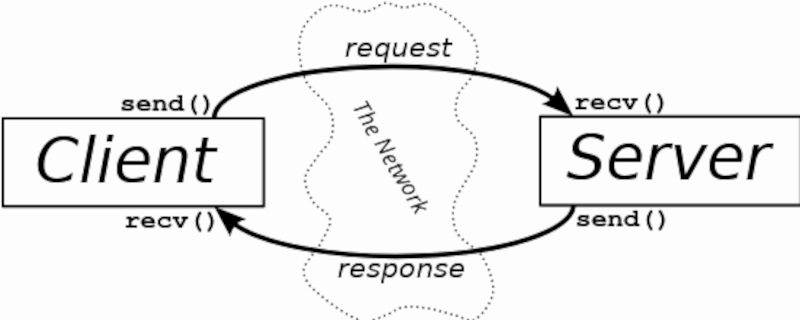
If you want a book on network programming, there are a few classic choices. [Comer’s] TCP/IP books are a great reference but sometimes is too low level. “Unix Networking Programming” by [Stevens] is the usual choice, but it is getting a little long in the tooth, as well. Now we have “Beej’s Guide to Network Programming Using Internet Sockets.” While the title doesn’t exactly roll off the tongue, the content is right on and fresh. Best part? You can read it now in your browser or in PDF format.

All the topics you’d expect are there in ten chapters. Of course, there’s the obligatory description of what a socket is and the types of sockets you commonly encounter. Then there’s coverage of addressing and portability. There’s even a section on IPV6.

After covering the most common socket API calls, there is a simple example. Then Chapter 7 covers “slightly advanced techniques.” That includes things like the select API call, partial sends, and broadcast packets. Chapter 9 is just man pages which are handy if you have the printed reference on an airplane. Overall, a good modern treatment of the topic.

While the socket API originated at Berkely, just about every network stack looks the same more or less, so if you learn these calls, you’ll do fine on whatever operating system you like, including many microcontrollers.

Usually, when we are looking at networking, our eyes are focused lower in the stack. But if you aren’t reverse engineering, the API is definitely the way to go.

Adblock test (Why?)


"network" - Google News
May 23, 2023 at 09:00AM
https://ift.tt/DySartw

Network Programming - Hackaday
"network" - Google News
https://ift.tt/COorHEY
Shoes Man Tutorial
Pos News Update
Meme Update
Korean Entertainment News
Japan News Update

FCC’s latest spectrum move rewards satellite providers - Network World

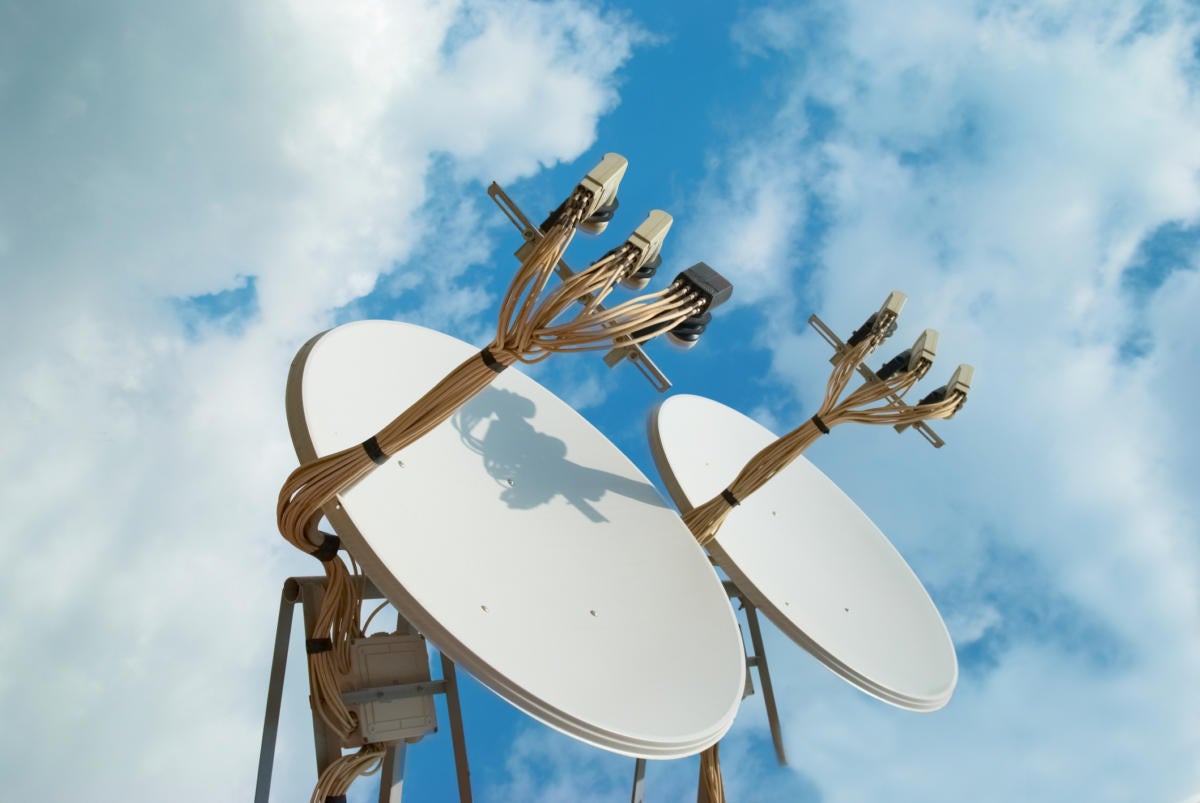
The FCC’s latest spectrum policy announcement, which preserves 500MHz of the 12GHz band for satellite use while designating another 500MHz for terrestrial radios, is a recognition that satellite internet providers like Starlink are being heard, according to experts.

The commission’s latest notice of proposed rulemaking, posted May 18, reflects a more even-handed approach than has been adopted in the past. In carving up the airwaves for C-band usage, substantial amounts of spectrum were taken away from incumbent satellite users and handed off to terrestrial operators, most notably major telecom providers.

It’s also a resolution of the long-brewing disagreement between Dish Network and the satellite industry — the former company had sought to use the 12.2GHz to 12.7GHz range for fixed wireless connectivity, over objections from satellite providers.

“Starlink and OneWeb actually requested that the FCC not allow that terrestrial two-way communications on the same band they’re running satellite,” said Octavio Garcia, a senior analyst at Forrester Research. “Their claim was that there would be interference.”

Starlink in particular, now boasts 1.5 million customers and therefore carries more weight than other satellite stakeholders may have had in the past, noted analyst Bill Ray of Gartner Research. The company, backed by Elon Musk’s SpaceX, offers residential and business coverage of much of the continental US, via a network of low-earth-orbit satellites, advertising between 25ms-50ms of latency for download speeds of between 20Mbps and 100Mbps.

It's also a potential business ISP, promising higher speeds —between 40 and 200Mbps — thanks to priority network access. It’s not alone in that area, either, with UK-based OneWeb positioning itself as a possible enterprise connectivity option.

“OneWeb’s pitching itself as a professional platform,” according to Ray. “It’s a lot more expensive than Starlink, and it only has 650 to 800 satellites, but it doesn’t need that many because it’s not providing the same kind of service — it provides SLAs and things like that.”

The idea, according to IDC research manager Pat Filkins, is to provide a broadband-like connectivity option for sites in rural areas or anywhere which might need pop-up Internet due to major weather events or large-scale terrestrial outages.

“[The FCC] tried to make everybody happy,” he said. “The terrestrial folks wanted that spectrum for 6G, since anywhere from 7 to 20[GHz] is a target.”

Will 6G face issues?

Spectrum scarcity has been an oft-cited issue for future network development. Auctions for 5G-relevant spectrum have brought in titanic sums for the FCC, demonstrating its value to network operators. It’s less clear whether this particular 500MHz of spectrum being parceled out to the satellite providers will be a net negative for the development of next-generation terrestrial networks, however.

“5G has demonstrated that the demand for bandwidth is not insatiable,” said Ray. “The idea that 6G will push up more and more demand is just not how it’s going to go — it’s going to be far more agile and isn’t just going to consume bandwidth forever.”

Furthermore, Ray added, particularly high frequencies for terrestrial networks — the 12GHz band in question here isn’t quite millimeter-wave, but it’s considerably higher than the frequencies widely used in existing networks — haven’t seen wide uptake.

“US millimeter-wave has been a terrible thing, and the rest of the world hasn’t even deployed it,” he said.

That fact, combined with the simultaneous designation of 500MHz for terrestrial use, suggests that the protection of some spectrum for satellite providers isn’t likely to materially impact the deployment of 6G networks, which are still far off.

“We anticipate 6G in 2028, 2029 or even 2030,” said Forrester’s Garcia. “Potentially this is a band that 6G could be targeting … [but] I don’t believe enterprise users should be concerned.”

Moreover, the protection of these frequencies for satellite use may make satellites a more convincing second option for enterprise customers, according to IDC’s Filkins.

“There’s definitely a business story there,” he said. “Satellites being less apt to be disrupted means their ability to grow the business is somewhat more protected.”

Next read this:

Adblock test (Why?)


"network" - Google News
May 23, 2023 at 02:48AM
https://ift.tt/64ft92z

FCC’s latest spectrum move rewards satellite providers - Network World
"network" - Google News
https://ift.tt/COorHEY
Shoes Man Tutorial
Pos News Update
Meme Update
Korean Entertainment News
Japan News Update
Excess profits on Motorola's Airwave estimated to be £1.3B - The Register

The UK's competition watchdog has estimated Motorola could make nearly £1.3 billion ($1.6 billion) in excess profits over a decade owing to its position as a supplier of the Airwave legacy blue light wireless comms network.

As part of a consultation discussing "charge controls" over Airwave, which was founded in 2000, the Competition and Markets Authority (CMA) said the US telecoms and network giant was set to make "supernormal profits of around £1.27 billion ($1.58 billion) from the operation of the Airwave Network between 1 January 2020 and 31 December 2029."

In its latest report on the subject, the CMA has ruled that features of the market for the communications network created an "adverse effect on competition" which gives Airwave Solutions – owned by Motorola Solutions – the "ability to price services above levels the CMA would expect to prevail in a competitive market and results in a detrimental effect on customers."

The CMA has published a draft order [PDF] for consultation. It proposes charge controls to limit the price of Airwave Solutions and Motorola Solutions for services in scope by more than 40 percent.

"It will, nonetheless, give Airwave Solutions and Motorola Solutions the opportunity to recover their reasonable costs of providing the services and to earn a reasonable level of profit in doing so, i.e. the level of profit that would be expected in a well-functioning market," the CMA said.

Airwave started out as part of BT, in various forms, was pun out in 2002 and ultimately became Airwave O2 Ltd. It was bought by two Macquarie Group investment funds in 2007. Motorola bought Airwave for £817.5 million ($1.017 billion) in 2015.

The CMA opened its investigation in October 2021 following concerns that the market might not be working well, resulting in a more expensive service. One concern was the Home Office's weak bargaining position when it came to the network; another was Motorola's dual role in providing the current network and in helping to deliver the Emergency Services Network to replace it. It proposed price caps on Airwave in its report published earlier this year.

Airwave had been due to stop running in 2022, after ESN, an upgrade to 4G with additional data services, was introduced. However, ESN has been delayed until at least 2026, possibly 2029, with additional costs running up to more than £1 billion ($1.24 billion).

In a statement sent to The Register, a spokesperson at Motorola Solutions, said:

"Anyone who enters into a contract with the U.K. government, and adheres to it, should be able to have trust and confidence in its terms. Despite the CMA finding no shortcomings in Airwave's exceptional service, the CMA intends to forcibly reduce the contractually agreed pricing going forward." ®

Adblock test (Why?)


"network" - Google News
May 22, 2023 at 05:13PM
https://ift.tt/lyKxDTG

Excess profits on Motorola's Airwave estimated to be £1.3B - The Register
"network" - Google News
https://ift.tt/COorHEY
Shoes Man Tutorial
Pos News Update
Meme Update
Korean Entertainment News
Japan News Update
Systems starting to come online after statewide network outages impact multiple agencies, officials say - WAFB

BATON ROUGE, La. (WAFB) - Jacques Berry confirmed that all of OMV field offices will be back open on Monday, May 22.

Multiple state agencies across Louisiana announced they were experiencing network outages that would impact their services.

According to officials, systems affected by the network outage were starting to come online Friday morning, May 19.

“While most of our systems are back online following yesterday’s (Thursday’s) hardware failure, we’re still experiencing connectivity issues with Office of Motor Vehicles locations,” Berry said.

The hardware failure that included the redundant backup systems is affecting the internet, email, and applications for all of the executive branches, not including elected officials or higher education, Berry explained.

The system was down for the remainder of the day on Thursday, Berry confirmed.

Berry said they are working to install new hardware they had on hand to reroute everything and get the systems back up.

All issues were a result of the hardware failure and there was no external interference.

RELATED: Louisiana OMV experiencing statewide network outage

The Louisiana Office of Motor Vehicles released the following statement:

The Louisiana Department of Children and Family Services released the following statement:

The Louisiana Department of Wildlife and Fisheries released the following statement:

No details have been released about what caused the network outage to occur.

Click here to report a typo.

Adblock test (Why?)


"network" - Google News
May 18, 2023 at 09:48PM
https://ift.tt/lOh42WG

Systems starting to come online after statewide network outages impact multiple agencies, officials say - WAFB
"network" - Google News
https://ift.tt/COorHEY
Shoes Man Tutorial
Pos News Update
Meme Update
Korean Entertainment News
Japan News Update

5G network slices could be vulnerable to attack, researchers say - Network World

5G promises increased speed, lower latency, and support for a significantly larger number of connected devices. But the growth in devices and in new applications that will ensue also will expand the attack surface, offering new opportunities for malicious actors to take advantage of security gaps.

Plus, as with any new technology, there is a great deal of potential for misconfigurations, errors, and unpatched vulnerabilities while companies are still learning how to deploy and secure 5G at scale.

About 75% of communication service providers worldwide said that they had experienced up to six security breaches of 5G networks within the past year, according to a November 2022 survey by GlobalData and Nokia. Half of the respondents said that they experienced an attack that resulted in the leakage of customer data, and nearly three quarters said that an attack had caused a service outage.

But 5G networks have a great, built-in security advantages over their predecessors, one of which is network slicing—the ability to subdivide networks into multiple virtual networks on top of a single physical infrastructure. Each network can have its own configurations, performance parameters, and quality of service. This allows different applications to share the same physical infrastructure but also provides an additional layer of isolation and security, creating barriers to attacker movement.

“5G introduced a large number of technical innovations and improvements to 4G technology, but network slicing was one of the most important,” says Doug Gatto, practice development manager, services, at IT services provider Insight, and security benefits are a major advantage. “It can really reduce the impact of a cyber attack by isolating an attack to one slice.”

However, a misconfigured 5G network slice is vulnerable to multiple threats, including denial-of-service attacks, man-in-the-middle attacks, and basic configuration attacks, he says. And if the slices aren’t designed properly, an attacker could also move from one slice to another, he adds.

Gatto says that he’s sure these kinds of attacks are already taking place, though the threat is a relatively new one, and he hasn’t yet seen public data about specific breaches.

Plus, the idea of 5G network slicing is very new. It requires that a carrier have standalone 5G in place, instead of a 5G layer over an existing 4G LTE network. That infrastructure is now becoming widely available, and carriers are just starting to experiment with slicing.

For example, in February, Singtel announced a 5G security-as-a-slice capability that will become available “in the next few months.” Also in February, Ericsson released a report calling 5G slicing a “near-term opportunity.” In March, Verizon’s Bryan Schromsky, managing partner for its public-sector unit, said that Verizon plans to begin implementing network slicing at the end of this year.

But the security risks surrounding 5G network slices are serious enough that, in December, the National Security Agency and the Cybersecurity and Infrastructure Security Agency, issued a warning and offered advice on mitigating these risks.

The security issues aren’t limited to attacks on individual slices; they can also cross between slices if the networks aren’t property secured, the agency says. “Improper network slice management may allow malicious actors to access data from different network slices or deny access to prioritized users,” the report says.

And researchers at Deloitte and Virginia Tech recently conducted a proof-of-concept test and demonstrated that lateral movement was, in fact, possible.

Say, for example, a particular device is connected to one network slice, says Abdul Rahman, associate vice president at Deloitte, “All we need to do is Google the vendor website, find out what the default username and password is, and build a script to try that username and password from different points within the network,” he says.

Then, once an initial slice has been compromised, that access can be used to pivot to other network slices, and compromise data or devices used by other customers.

According to the CISA report, the three biggest threats to 5G network slices are denial-of-service (DoS) attacks, configuration attacks, and man-in-the-middle attacks.

DoS attacks could degrade service across slices.

In a DoS attack, a malicious actor floods a network or critical application or component with traffic so every device using the same slice suffers an outage.

According to a report released earlier this year by ENEA AdaptiveMobile Security, denial of service attacks against 5G networks cannot be mitigated with today’s approaches and technologies.

It’s possible for network slices to reduce the reach of DoS attacks by isolating their effect to an individual network segment but only if the infrastructure is properly configured.

But some types of attacks can spill over into other slices if proper preventative measures aren’t taken. For example, if malware compromises an IoT device connected to the 5G network, and it floods the network with messages, it could degrade signal quality for all network slices that share the same spectrum or other physical resources.

Another possibility is that a malicious mobile-edge computing application infects one slice and starts to generate fake and computationally intensive tasks. It will use up edge-computing resources, and, if the malware is able to circumvent compute-resource segmentation policies, it can affect the performance of all the other slices sharing the same edge computing.

Deloitte and Virginia Tech released a report in April summarizing denial of service attack vectors for 5G networks.

“It was a contained study within a lab environment,” says Shehadi Dayekh, 5G and edge specialist leader at Deloitte. “But it is practical. And it is possible to create resource constraints on the common infrastructure that both slices are using.”

In addition, network architects might not want to duplicate every network function on each slice, so an attack on a particular network function might affect every slice that uses it, Dayekh says.

In addition, there are some shared resources that all slices have to use. Say, for example, an operator uses 5G network slices to offer private networks to several enterprise clients in the same area.

“They would end up using one cell tower to feed multiple clients,” says Dayekh. “You cannot replicate the cell tower for each and every single client. So if you’ve compromised that specific shared resource, that will end up affecting other clients, as well.”

Configuration attacks can lead to wide compromises.

Those same shared resources can also provide an opportunity for malware to spread between slices, Dayekh says. For instance, a network function might use a common set of servers to provide services to different device types from different customers on different network slices.

In this case one customer’s IoT devices might need access to the same network function and its underlying infrastructure as another customer’s connected vehicles. “These are totally different industries and different clients but are served by the same compute nodes that have the same network function,” he says. If there’s a vulnerability within the IoT device that attackers exploit, they could then push malware to other devices that are connected via the same network function.

IoT devices are notorious security risks because many of them “are old, and many may have firmware that is old and not patched,” he says.

But other network components may also be using default usernames and passwords or have unpatched vulnerabilities, he adds.

Proper configuration of both the network infrastructure and shared network services is key, he says. “Do you have ports that are open? Do you have the right segmentation and not allow users to discover more of these network functions?” he says.

According to CISA, configuration attacks can have a broad range of adverse effects. A malicious attacker may be able to steal data from other users on the same network slice, but if are weaknesses in the way shared components are accessed, attackers can also gain access to another slice.

“In a virtualized architecture it will be more difficult to detect and recognize the types of traffic crossing these networks and mitigate against any new threats,” CISA warns.

Man-in-the-middle attacks endanger data.

5G network slices are also vulnerable to man-in-the-middle attacks, CISA says, where an attacker jumps into the middle of an unencrypted conversation between two network participants. There it can listen to their communication to steal data, pass along corrupted data, or shut down or slow the communication.

“Such an attack could be devastating, as misinformation and disinformation could result from the malicious actor modifying the contents of the messages,” CISA says.

How to secure network slices.

According to CISA, two key aspects of network slice security are Zero Trust Architecture (ZTA) and continuous monitoring.

ZTA, together with multi-layer security, encryption, and isolation, can help defend data and systems from attacks within individual slices and across different slices.

Monitoring can detect malicious activity, but many tools focus on performance and not on malicious attacks, the agency warns.

Network operators want to have performance monitoring and quality-of-service monitoring, says Insight’s Gatto. “But you actually need control-plane monitoring, monitoring the logic of the actual network to make sure it’s protected against any malicious actors.”

Operators should also consider anomaly-detection and intrusion-prevention systems, he adds. These can identify and stop dangerous behaviors.

Network security starts with having good visibility, says Deloitte’s Dayekh. “Knowing where your infrastructure is, knowing what resources each component is using, tracking IoT devices, and tracking connected devices, whether known or unknown devices. Once you have that visibility, you can start applying policies and rules around securing that connectivity.”

However, the expansion and deployment of Kubernetes services and containerized deployment of telecommunication functions present a challenge for carriers, says Deloitte’s Dayekh.

“It’s becoming harder and harder to have that visibility and control over network traffic and over access, and it’s just adding to the complexity of visibility, detection, and response,” he says. “Especially when you have hundreds if not thousands of new devices joining the network every single day.”

Finally, carriers need to have a plan for when prevention measures fail.

It’s important to be prepared for an attack if one does occur, says Dayekh. “What is your plan of action if something falls down? You should have a method in order to control and be able to prevent any further damage in your network,” he says.

Real-world attacks have yet to surface.

Deloitte runs tests on its lab environments that are connected to major cloud hyperscalers, Dayekh says. “You can tell that IoT devices have multiple vulnerabilities, open ports, and outdated software,” he says. “It’s clear, if you look at it, that major organizations don’t have, at this point, the full visibility into what’s connected, to begin with.”

Dayekh says he hasn’t seen successful attacks on vulnerable slices in the wild, but, “I am sure that these slices exist, and I’m sure the same vulnerabilities apply to those slices.”

Insight’s Gatto says he also hasn’t seen public-facing data about network slices being successfully attacked, “but it probably is happening.”

One ray of hope is that, in the short term, network slicing attacks are going to be harder to accomplish because of the way cellular technologies work, says Gatto. “5G, in general, is secure by default, unlike Wi-Fi, which is open by default, so it would be harder to compromise.”

With Wi-Fi, all you need is a password or some type of secure certificate exchange to join a network, but with 5G, you’ll need a physical SIM card or an eSim even to join a network or network slice, he says.

The attacks themselves would need to be considerably complex in order to succeed, says Chester Wisniewski, field CTO of applied research at global cybersecurity firm Sophos. “To date, almost no one outside of a nation-state has the resources to conduct an attack like this effectively,” he says.

Still, Wisniewski urges caution.

“If you are adopting 5G for mission-critical applications, you shouldn’t assume it will always be available and unhackable,” he says. “Like any device communicating over a public network, devices should always use encryption and verify both client and server identities before communicating.”

Next read this:

Adblock test (Why?)


"network" - Google News
May 22, 2023 at 08:39PM
https://ift.tt/jhoTg40

5G network slices could be vulnerable to attack, researchers say - Network World
"network" - Google News
https://ift.tt/COorHEY
Shoes Man Tutorial
Pos News Update
Meme Update
Korean Entertainment News
Japan News Update

5G network slices could be vulnerable to attack, researchers say - Network World

5G promises increased speed, lower latency, and support for a significantly larger number of connected devices. But the growth in devices and in new applications that will ensue also will expand the attack surface, offering new opportunities for malicious actors to take advantage of security gaps.

Plus, as with any new technology, there is a great deal of potential for misconfigurations, errors, and unpatched vulnerabilities while companies are still learning how to deploy and secure 5G at scale.

About 75% of communication service providers worldwide said that they had experienced up to six security breaches of 5G networks within the past year, according to a November 2022 survey by GlobalData and Nokia. Half of the respondents said that they experienced an attack that resulted in the leakage of customer data, and nearly three quarters said that an attack had caused a service outage.

But 5G networks have a great, built-in security advantages over their predecessors, one of which is network slicing—the ability to subdivide networks into multiple virtual networks on top of a single physical infrastructure. Each network can have its own configurations, performance parameters, and quality of service. This allows different applications to share the same physical infrastructure but also provides an additional layer of isolation and security, creating barriers to attacker movement.

“5G introduced a large number of technical innovations and improvements to 4G technology, but network slicing was one of the most important,” says Doug Gatto, practice development manager, services, at IT services provider Insight, and security benefits are a major advantage. “It can really reduce the impact of a cyber attack by isolating an attack to one slice.”

However, a misconfigured 5G network slice is vulnerable to multiple threats, including denial-of-service attacks, man-in-the-middle attacks, and basic configuration attacks, he says. And if the slices aren’t designed properly, an attacker could also move from one slice to another, he adds.

Gatto says that he’s sure these kinds of attacks are already taking place, though the threat is a relatively new one, and he hasn’t yet seen public data about specific breaches.

Plus, the idea of 5G network slicing is very new. It requires that a carrier have standalone 5G in place, instead of a 5G layer over an existing 4G LTE network. That infrastructure is now becoming widely available, and carriers are just starting to experiment with slicing.

For example, in February, Singtel announced a 5G security-as-a-slice capability that will become available “in the next few months.” Also in February, Ericsson released a report calling 5G slicing a “near-term opportunity.” In March, Verizon’s Bryan Schromsky, managing partner for its public-sector unit, said that Verizon plans to begin implementing network slicing at the end of this year.

But the security risks surrounding 5G network slices are serious enough that, in December, the National Security Agency and the Cybersecurity and Infrastructure Security Agency, issued a warning and offered advice on mitigating these risks.

The security issues aren’t limited to attacks on individual slices; they can also cross between slices if the networks aren’t property secured, the agency says. “Improper network slice management may allow malicious actors to access data from different network slices or deny access to prioritized users,” the report says.

And researchers at Deloitte and Virginia Tech recently conducted a proof-of-concept test and demonstrated that lateral movement was, in fact, possible.

Say, for example, a particular device is connected to one network slice, says Abdul Rahman, associate vice president at Deloitte, “All we need to do is Google the vendor website, find out what the default username and password is, and build a script to try that username and password from different points within the network,” he says.

Then, once an initial slice has been compromised, that access can be used to pivot to other network slices, and compromise data or devices used by other customers.

According to the CISA report, the three biggest threats to 5G network slices are denial-of-service (DoS) attacks, configuration attacks, and man-in-the-middle attacks.

DoS attacks could degrade service across slices.

In a DoS attack, a malicious actor floods a network or critical application or component with traffic so every device using the same slice suffers an outage.

According to a report released earlier this year by ENEA AdaptiveMobile Security, denial of service attacks against 5G networks cannot be mitigated with today’s approaches and technologies.

It’s possible for network slices to reduce the reach of DoS attacks by isolating their effect to an individual network segment but only if the infrastructure is properly configured.

But some types of attacks can spill over into other slices if proper preventative measures aren’t taken. For example, if malware compromises an IoT device connected to the 5G network, and it floods the network with messages, it could degrade signal quality for all network slices that share the same spectrum or other physical resources.

Another possibility is that a malicious mobile-edge computing application infects one slice and starts to generate fake and computationally intensive tasks. It will use up edge-computing resources, and, if the malware is able to circumvent compute-resource segmentation policies, it can affect the performance of all the other slices sharing the same edge computing.

Deloitte and Virginia Tech released a report in April summarizing denial of service attack vectors for 5G networks.

“It was a contained study within a lab environment,” says Shehadi Dayekh, 5G and edge specialist leader at Deloitte. “But it is practical. And it is possible to create resource constraints on the common infrastructure that both slices are using.”

In addition, network architects might not want to duplicate every network function on each slice, so an attack on a particular network function might affect every slice that uses it, Dayekh says.

In addition, there are some shared resources that all slices have to use. Say, for example, an operator uses 5G network slices to offer private networks to several enterprise clients in the same area.

“They would end up using one cell tower to feed multiple clients,” says Dayekh. “You cannot replicate the cell tower for each and every single client. So if you’ve compromised that specific shared resource, that will end up affecting other clients, as well.”

Configuration attacks can lead to wide compromises.

Those same shared resources can also provide an opportunity for malware to spread between slices, Dayekh says. For instance, a network function might use a common set of servers to provide services to different device types from different customers on different network slices.

In this case one customer’s IoT devices might need access to the same network function and its underlying infrastructure as another customer’s connected vehicles. “These are totally different industries and different clients but are served by the same compute nodes that have the same network function,” he says. If there’s a vulnerability within the IoT device that attackers exploit, they could then push malware to other devices that are connected via the same network function.

IoT devices are notorious security risks because many of them “are old, and many may have firmware that is old and not patched,” he says.

But other network components may also be using default usernames and passwords or have unpatched vulnerabilities, he adds.

Proper configuration of both the network infrastructure and shared network services is key, he says. “Do you have ports that are open? Do you have the right segmentation and not allow users to discover more of these network functions?” he says.

According to CISA, configuration attacks can have a broad range of adverse effects. A malicious attacker may be able to steal data from other users on the same network slice, but if are weaknesses in the way shared components are accessed, attackers can also gain access to another slice.

“In a virtualized architecture it will be more difficult to detect and recognize the types of traffic crossing these networks and mitigate against any new threats,” CISA warns.

Man-in-the-middle attacks endanger data.

5G network slices are also vulnerable to man-in-the-middle attacks, CISA says, where an attacker jumps into the middle of an unencrypted conversation between two network participants. There it can listen to their communication to steal data, pass along corrupted data, or shut down or slow the communication.

“Such an attack could be devastating, as misinformation and disinformation could result from the malicious actor modifying the contents of the messages,” CISA says.

How to secure network slices.

According to CISA, two key aspects of network slice security are Zero Trust Architecture (ZTA) and continuous monitoring.

ZTA, together with multi-layer security, encryption, and isolation, can help defend data and systems from attacks within individual slices and across different slices.

Monitoring can detect malicious activity, but many tools focus on performance and not on malicious attacks, the agency warns.

Network operators want to have performance monitoring and quality-of-service monitoring, says Insight’s Gatto. “But you actually need control-plane monitoring, monitoring the logic of the actual network to make sure it’s protected against any malicious actors.”

Operators should also consider anomaly-detection and intrusion-prevention systems, he adds. These can identify and stop dangerous behaviors.

Network security starts with having good visibility, says Deloitte’s Dayekh. “Knowing where your infrastructure is, knowing what resources each component is using, tracking IoT devices, and tracking connected devices, whether known or unknown devices. Once you have that visibility, you can start applying policies and rules around securing that connectivity.”

However, the expansion and deployment of Kubernetes services and containerized deployment of telecommunication functions present a challenge for carriers, says Deloitte’s Dayekh.

“It’s becoming harder and harder to have that visibility and control over network traffic and over access, and it’s just adding to the complexity of visibility, detection, and response,” he says. “Especially when you have hundreds if not thousands of new devices joining the network every single day.”

Finally, carriers need to have a plan for when prevention measures fail.

It’s important to be prepared for an attack if one does occur, says Dayekh. “What is your plan of action if something falls down? You should have a method in order to control and be able to prevent any further damage in your network,” he says.

Real-world attacks have yet to surface.

Deloitte runs tests on its lab environments that are connected to major cloud hyperscalers, Dayekh says. “You can tell that IoT devices have multiple vulnerabilities, open ports, and outdated software,” he says. “It’s clear, if you look at it, that major organizations don’t have, at this point, the full visibility into what’s connected, to begin with.”

Dayekh says he hasn’t seen successful attacks on vulnerable slices in the wild, but, “I am sure that these slices exist, and I’m sure the same vulnerabilities apply to those slices.”

Insight’s Gatto says he also hasn’t seen public-facing data about network slices being successfully attacked, “but it probably is happening.”

One ray of hope is that, in the short term, network slicing attacks are going to be harder to accomplish because of the way cellular technologies work, says Gatto. “5G, in general, is secure by default, unlike Wi-Fi, which is open by default, so it would be harder to compromise.”

With Wi-Fi, all you need is a password or some type of secure certificate exchange to join a network, but with 5G, you’ll need a physical SIM card or an eSim even to join a network or network slice, he says.

The attacks themselves would need to be considerably complex in order to succeed, says Chester Wisniewski, field CTO of applied research at global cybersecurity firm Sophos. “To date, almost no one outside of a nation-state has the resources to conduct an attack like this effectively,” he says.

Still, Wisniewski urges caution.

“If you are adopting 5G for mission-critical applications, you shouldn’t assume it will always be available and unhackable,” he says. “Like any device communicating over a public network, devices should always use encryption and verify both client and server identities before communicating.”

Next read this:

Adblock test (Why?)


"network" - Google News
May 22, 2023 at 08:39PM
https://ift.tt/jhoTg40

5G network slices could be vulnerable to attack, researchers say - Network World
"network" - Google News
https://ift.tt/COorHEY
Shoes Man Tutorial
Pos News Update
Meme Update
Korean Entertainment News
Japan News Update

Search

Featured Post

Comcast reluctantly agrees to stop its misleading “10G Network” claims - Ars Technica

Enlarge Comcast Comcast has reluctantly agreed to discontinue its "Xfinity 10G Network" brand name after losing an appeal of...

Postingan Populer