All Baton Rouge police officers are equipped with body cameras, but some officers now have special triggers. So whenever these officers remove a gun or stun gun from its holster, the trigger is set-off: Any body-worn cameras within a 30-foot radius automatically turns on, set to record whatever happens next.
Body cameras — now common among police forces across the nation — offer a measure of transparency and accountability. They're a "great tool" that "documents and tells you both sides of the story," said Sgt. L'Jean McKneely Jr., a BRPD spokesman.
Still, not all law enforcement agencies have fully embraced the technology. Research shows body camera use remains concentrated in larger urban districts as many smaller agencies, and those covering more rural areas, have been unable or unwilling to acquire the cameras.
The East Baton Rouge Parish Sheriff's Office, one of the largest police forces in the state, has yet to equip its deputies with body cameras — a fact that's garnered attention in recent weeks as protesters have demanded reforms from local law enforcement.
BR for the People, which has organized protests on Siegen Lane and outside the home of East Baton Rouge Parish District Attorney Hillar Moore III, has called for wider use of body cameras.

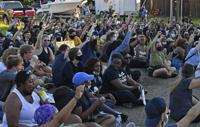
Demonstrators on Thursday evening marched to the home of East Baton Rouge District Attorney Hillar Moore III to call for accountability in off…
Sheriff Sid Gautreaux "does foresee our agency utilizing them at some point in the near future," said the agency's spokeswoman, Casey Rayborn Hicks, adding that the department is consulting with BRPD and the State Police on how to manage the "exorbitant costs" associated with storing the video footage.
"The sheriff is certainly in support of body-camera use. However, given the current economic impact that COVID-19 has had on our funding, we are also having to consider budget restraints," Hicks said.
Outfitting the office and storing the footage is projected to cost anywhere from $3 million to $5 million, Hicks said.
Eugene Weatherspoon Collins, president of the NAACP's Baton Rouge chapter, said the need for body cameras extends beyond Baton Rouge and said financial support for the equipment should come from the state Legislature.
Of the 12 parishes in the surrounding region, only the sheriff's offices for Assumption, St. Helena and St. James utilize body cameras, according to a recent survey commissioned by the Legislature.
"We know that sometimes not all departments have these resources in their budgets," Collins said. "This has to be led from the state level where there is a state mandate that all officers and deputies, no matter what, have body cameras."

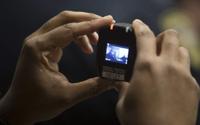
Three people have died at the hands of local law enforcement officers since July, and there's no body camera footage of their deaths.
Footage captured from bystanders' cellphones or from private surveillance cameras has reshaped how the public understands policing, and images from a string of high-profile shootings in recent years — including the 2016 Alton Sterling killing in Baton Rouge — have permeated debates on police reform.
With widespread use of body cameras, "we can make every name of every person harmed by police one that is known and we can have accountability and transparency," said Michelle Sorenson, a protester who spoke at Thursday's demonstration.
The technology, however, isn't a quick fix for issues of police brutality.
An 18-month study of more than 2,000 police officers in Washington D.C. found that those who were equipped with cameras used force and prompted civilian complaints at about the same rate as those who did not have them, neutralizing arguments that they have a "civilizing effect" on police interactions.
Instead, advocates and police representatives both argue that body cameras simply offer another layer of transparency for an institution that's faced varying levels of trust from communities of color.
The devices, McKneely said, "take out the 'he said, she said.'"
"equip" - Google News
June 15, 2020 at 08:30AM
https://ift.tt/2YzKfEb
Protesters demand East Baton Rouge Sheriff's Office equip deputies with body cameras - The Advocate
"equip" - Google News
https://ift.tt/35zdBFR
https://ift.tt/3fgZnOp




No comments:
Post a Comment